
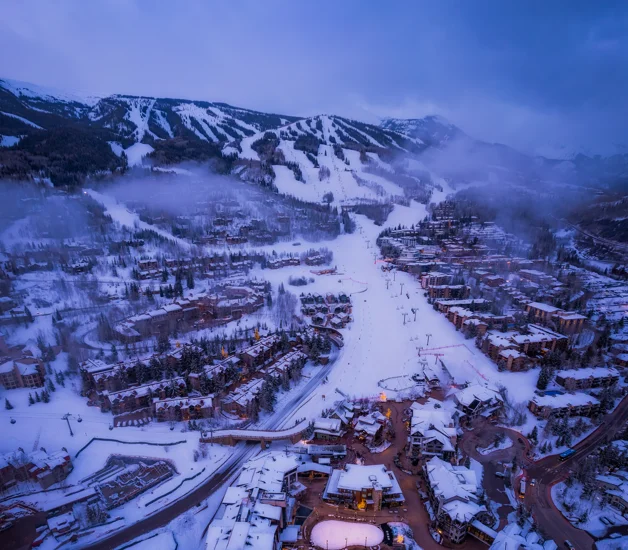
Officially listed at 5.3 miles from top to bottom, Long Shot is the signature long-distance run at Snowmass — a traverse-and-glide descent through the Burnt Mountain sidecountry that drops from 11,325 feet down to the Two Creeks base. It’s marked blue on the trail map. It skis like an expedition. For Snowmass regulars, doing Long Shot at least once each trip is a ritual. For first-timers, it’s the kind of line you still talk about ten years later.
Getting to the Gate
Long Shot is lift-served, but there’s a hike to earn it. The access sequence goes like this:
Ride the Elk Camp Gondola from Base Village to its mid-mountain terminal at 9,765 feet. Ride the Elk Camp high-speed six-pack — the new lift that opened for the 2025-26 season, replacing the older quad — to the top of the Elk Camp chair at 11,325 feet. From the top of the chair, exit hard skier’s-left and gather speed across the short flat. Ahead of you is a short hike, usually five to ten minutes on foot through the gates, up to the Long Shot entrance. The hike is easy by ski-area standards, but you’re at high altitude and you’re carrying skis, so pace it.
Once through the gates, you’re in the Burnt Mountain sidecountry — patrolled, in-bounds, and signed, but managed as a backcountry-style zone. This is the terrain Snowmass opened in 2013 as a permanent expansion of the lift-served ski area.
The First Pitch
The first pitch off the Long Shot entrance is the real work of the run. It’s steep enough to ski like a black diamond on a hard day and mellow enough to feel like a powder playground on a soft one. Variable conditions are the rule, not the exception. Wind-affected snow, sun-crust on some aspects, and chalk on others are all normal. If you’ve got a group, let the strongest skier lead through the first pitch so newcomers can watch the line.
The good news: once you’re through the first pitch, the terrain opens and the run turns into one of the most beautiful ski descents in Colorado. Open slopes through the Burnt Mountain bowl, occasional stands of spruce, long sight lines across the Elk Range. On a clear day with fresh snow, the upper half of Long Shot is as good as skiing gets at a North American resort.
The Middle Miles
The middle of Long Shot is the part most people don’t expect. After the opening bowl, the run mellows into a long contouring traverse through aspen and conifer — three miles of rolling, gentle terrain that a strong intermediate can ski without stress but that tires out unfit legs fast. Three new cut runs — Split Tree, Rio, and A-Line — weave through the Burnt Mountain Glades before merging back into the Long Shot corridor.
Two things to know about the middle section:
First, snowboarders will occasionally unstrap and skate. The traverse has flat sections and a few spots that even climb slightly. On a board, you’ll sometimes need to push, pole, or walk. If you’re on a splitboard or a pow-oriented setup, you’ll be fine. On a park board, prepare for a workout.
Second, there is no bail-out option. Once you’re committed to Long Shot, you’re going all the way to Two Creeks. No side exits, no lift to duck under. If someone in your group bonks mid-run, you’re walking them out the rest of the way. Fuel up before you start.
The Finish at Two Creeks
Long Shot ends at the base of the Two Creeks chairlift on the far east side of the Snowmass ski area. From there you have a choice. Ride Two Creeks back up and make your way across the mountain via the rest of the lift system. Or click out, sit on the bench, and let the run settle before your next move. The Two Creeks base is a quieter corner of Snowmass — worth a look even if you don’t ski it much otherwise.
If you’re skiing home to Stonebridge, you’ll ride Two Creeks up, cross the mountain via a combination of chairs back toward Sheer Bliss, and work your way down Fanny Hill to the Village base. Budget a good 45 minutes for the whole trip home on tired legs.
A Note on the "Longest Run" Claim
Snowmass lists Long Shot at 5.3 miles, and most guides cite that figure. An Aspen Times column once measured the actual skiable distance at closer to 3 miles when you account for how much of the 5.3 is traverse versus descent. Whichever way you measure it, Long Shot is one of the longest continuous in-bounds ski descents in the United States. Heavenly’s Olympic Downhill is sometimes cited as slightly longer. Either way, you’re doing a run that very few resorts anywhere in North America can match.
The more honest pitch: Long Shot isn’t about the mileage number. It’s about the experience of skiing for twenty-plus minutes through terrain that feels bigger and wilder than the rest of the mountain. The number is a talking point. The run is what you remember.
Timing, Conditions, and When to Commit
Long Shot doesn’t ski the same two days in a row. The key variables:
- Weather at the top of Elk Camp. On windy days the short hike to the gates can be unpleasant. Check conditions before you commit.
- Snow on the middle traverse. Early in the season, before the Burnt Mountain Glades have filled in, the middle miles can be thin. Late January through April is usually the sweet spot.
- Powder timing. On the morning after a big storm, Snowmass ski patrol often holds the Burnt Mountain gates until avalanche work is complete. Long Shot can open later than the rest of the mountain on storm days.
- Afternoon sun. Because the run ends on the lower east side, the runout to Two Creeks can turn to mashed potatoes by mid-afternoon in spring. Ski it in the morning for the best overall conditions.
The Rules of a Good Long Shot Lap
Local pointers from people who ski it every week:
- Fuel up before you drop. Breakfast, bar in the pocket. You’re about to burn through more energy than a normal ski lap.
- Ski with a partner. The middle miles are remote enough that a solo injury becomes a real problem. Response times from patrol are longer than on the groomed trails.
- Don’t push the pace early. Save legs for the lower section. You’ve got a long way to go.
- Sit on the bench at the bottom. The Two Creeks base is usually quiet. Take the moment.
Who Long Shot Is For
Strong intermediates and above who are comfortable with variable in-bounds snow and have the conditioning for a long descent. A confident blue skier can do this in good conditions — but the first pitch is unforgiving if the snow is hard.
Skiers, primarily. Snowboarders can and do ride Long Shot, but the middle traverses punish a board. If you’re on a pow-oriented setup, you’ll be fine. If you’re on a park deck, prepare for some unstrapping.
Anyone who wants a bucket-list Snowmass run. This is the one every local asks about. There’s a reason it ends up in every Snowmass article ever written.
Ski Home to Stonebridge
Long Shot ends at Two Creeks, a lift ride plus a cross-mountain traverse from Stonebridge. After the 45-minute trip home on tired legs, the ski-in, ski-out location of Stonebridge Condominiums — where you click out at your building’s door rather than a parking lot — is the kind of small convenience that feels like a big one. Hot tub, fireplace, couch. All twenty feet from the snow.
Ready to plan a Snowmass trip with Long Shot on the itinerary? Reserve your Stonebridge condo or call us at 1-800-323-2577. We’ll match you with the right unit for your group — and point you to a couch with a view when your legs finally give out.