
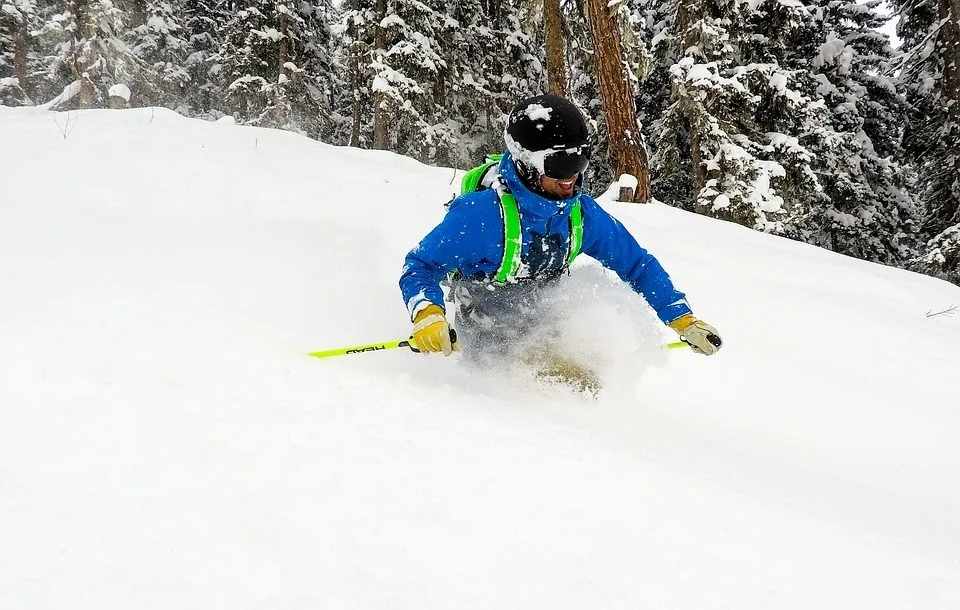
Most ski mountains have a zone locals talk about in hushed tones — the place you don’t bring your in-laws, the place that separates skiers who say they can ski steep from skiers who actually can. At Snowmass, that zone is Hanging Valley Wall. A hike-to expert area off the High Alpine lift, Hanging Valley delivers the steepest in-bounds terrain on the mountain: tight chutes, wind-loaded pockets, and powder that stays skiable for days after a storm because the access gate weeds out the uncommitted. If you’re ready for it, it’s some of the best expert skiing in Colorado. If you’re not, the signs at the entrance will tell you so in plain English.
What Hanging Valley Actually Is
Hanging Valley is a north-facing alpine cirque that sits above the High Alpine lift, accessed through a boot-pack hike along a ridge. The “Wall” refers to a series of steep chutes and open faces that drop off the ridge into the cirque itself. The “Glades” refer to the tree skiing below the wall, which deposits you back onto the High Alpine runs for the lift ride back.
The whole zone is in-bounds — patrolled, avalanche-controlled, and marked with expert-only signage. But it skis like backcountry. There are no groomed lines, no cut runs, and no crowds. A strong skier can drop in, ski a 40-degree chute in waist-deep powder, pop out into old-growth spruce glades, and be back in the lift line in fifteen minutes.
The Access: What the Hike Actually Looks Like
From the top of the High Alpine lift, you take a traverse along the ridge toward a marked gate. Patrol opens the gate after avalanche work is complete — usually late morning on storm days, earlier on blue-sky days after a clean overnight. Past the gate, a boot-pack runs along the ridge for roughly ten to twenty minutes depending on which drop-in you’re targeting.
The hike isn’t technical. It’s a well-defined boot-pack, usually kicked in by first hikers of the day, and it climbs maybe 300 vertical feet total. But it’s at 12,000 feet of elevation, in ski boots, carrying skis. If you’re not acclimated, you’ll feel it. Take your time, breathe, and don’t try to pass the person in front of you.
The Lines: Drop-In by Drop-In
Hanging Valley Wall is a series of named drop-ins along the ridge, each with its own character. They’re marked with small signs at the entrance to each chute.
Rocky Mountain High is the first major drop-in along the ridge and arguably the most approachable of the chutes. It opens into a wide, steep face before narrowing into a fall-line chute. Strong advanced skiers can handle it in good conditions. In marginal conditions — hard snow, tracked-out chop — it becomes legitimately consequential.
The Edge is exactly what the name describes. A tighter entrance than Rocky Mountain High, with a pitch that feels vertical for the first few turns before easing into the cirque.
Roberto’s is a classic chute line named for the late Roberto Rivera, a Snowmass ski patroller. Steep, narrow at the top, and committing — you can’t traverse out once you’re in.
Baby Ruth is one of the deeper hikes along the ridge but rewards the effort with a long, sustained steep face and consistent fall-line skiing.
The Wall 1 / Wall 2 area refers to the central portion of the cirque, with multiple entrance points along the ridge feeding into the same general open bowl below. This is where you’ll find the best powder pockets on deep days.
Below all of the chutes, the terrain opens into Hanging Valley Glades — old-growth spruce and subalpine fir with enough spacing to ski aggressively. The glades carry you back down to the High Alpine lift for another lap.
When Hanging Valley Skis Best
The best Hanging Valley days are 24 to 48 hours after a significant storm. Why not the day of? Because patrol needs to complete avalanche mitigation before opening the gate, and on big storm days, that can take until late afternoon or even until the following morning.
The day-after pattern is the sweet spot. The gate typically opens by mid-morning. Powder is still knee-deep in most of the cirque. And most of the powder-hound crowd has moved on to the Cirque Poma zone, leaving Hanging Valley quieter than it has any right to be.
North-facing aspect is the other reason Hanging Valley keeps giving. Long after south-facing terrain has baked into corn or crust, the Wall holds cold, dry snow in the trees and in the shadowed pockets of the cirque.
Who Should Ski It — And Who Shouldn’t
Hanging Valley Wall is genuine expert terrain. The signs at the gate don’t overstate it. If you hesitate on double-black groomed runs, if you’re uncomfortable on 35-degree pitches, if you haven’t skied in powder above your knees before — Hanging Valley is not the right introduction. The consequences of a fall in the steeper chutes can include sliding for several hundred feet, hitting trees, or being partially buried if conditions allow.
That said, the zone is inside the ski area boundary, patrolled, and avalanche-controlled. It is substantially safer than true backcountry terrain of similar steepness. A strong advanced skier who is honest about their abilities can ski the mellower drop-ins — Rocky Mountain High in good conditions, for example — as a gateway into the zone.
If you’re unsure whether you’re ready, here’s the honest test: ski the blue-black runs off High Alpine first. Green Cabin, Campground, and Reidar’s are the natural progression. If you’re comfortable skiing those in variable snow at full speed, Hanging Valley is within reach. If those runs feel hard, come back next year.
What to Bring
A transceiver, probe, and shovel are not required by patrol for in-bounds skiing, but many local skiers carry them in Hanging Valley anyway given the pitch and exposure. At minimum:
Skis or a snowboard you trust in powder and variable conditions — stiff, wide skis help. A helmet is non-negotiable. A backpack small enough to hike in comfortably, with water, a snack, and layers. Goggles with a lens appropriate for low light — much of the cirque sits in shade.
After the Last Lap
Hanging Valley is the kind of terrain that ends a day. Once you’ve skied it well, you’ve earned whatever comes next — usually a long lunch on the High Alpine deck, then a slow cruise back to the base via Green Cabin or the Big Burn. By the time you click out of your skis, your legs will know you’ve skied something real.
Ski Home to Stonebridge
After a morning on Hanging Valley Wall, the best thing on earth is a hot tub that’s a 40-yard walk from where you clicked out of your bindings. Stonebridge Condominiums sits ski-in, ski-out on Fanny Hill, which means the transition from “last run” to “steam rising off the water” takes minutes, not the hour-long shuttle slog that long-range lodging requires. Our on-site ski concierge stores your gear for the night so you don’t carry it home. Tomorrow, you click in at your door and head back up to do it again.
Ready to plan a Snowmass trip built around earning your turns in Hanging Valley? Reserve your Stonebridge condo or call us at 1-800-323-2577. We’ll match you with the right unit for your group and your skiing style.